

Craps looks lively on the floor, but the maths underneath is plain enough once you strip the noise. I’ve spent thirty years across payments and digital assets in Europe and Australia, and the same rule keeps coming back: if you can’t read the edge, you’re just funding someone else’s margin. That’s the lens I’m using here, because craps house edge by bet is really a question of which line you stand on before the dice even roll. goospin runs a compact table selection that keeps the better odds visible without burying them under flashier side wagers. I reckon that matters more than any bonus promise when you’re trying to stretch a session on a Tuesday arvo.
Reading the pass and don’t pass lines
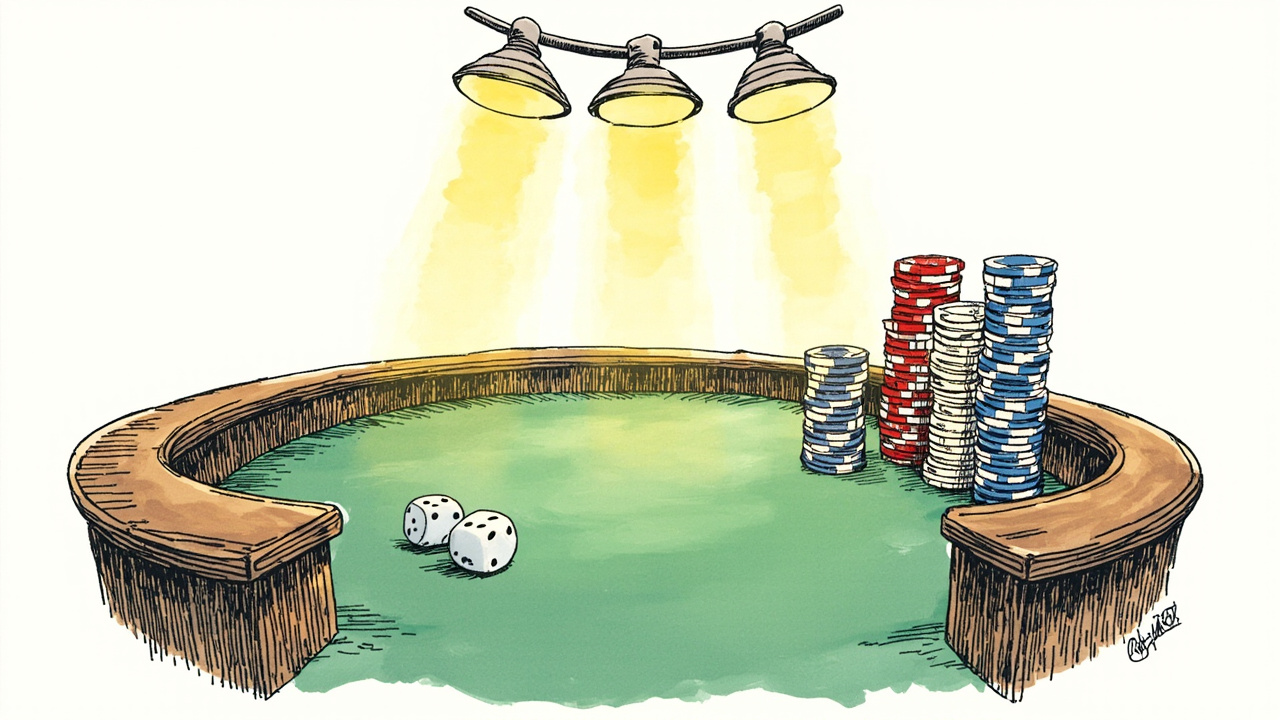
The pass line is the default entry point for most players, and its house edge sits around 1.41 percent before any odds are added. That’s a verifiable figure, not a marketing line, because it comes straight from the dice probabilities on the come-out and the point cycle. The don’t pass line runs slightly tighter at roughly 1.36 percent, which is why a handful of disciplined players prefer it when they’re comfortable betting against the table. I’ve seen payment and risk teams in Melbourne treat these two bets the same way they’d treat a low-fee settlement rail: boring, predictable, and worth keeping as the core rather than the decoration. A bonus activation might cover your first few spins, but it doesn’t rewrite the underlying edge, so I’d treat the first deposit as a way to observe the table rhythm rather than a signal to chase.
- Pass line base bet: 1.41 percent edge before odds
- Don’t pass line base bet: 1.36 percent edge before odds
- Come and don’t come bets: same edge structure as their line counterparts
Where the edge climbs on proposition wagers
The real damage in craps shows up when the table layout starts selling single-roll bets with short odds and high payouts. A hard four or hard ten carries an edge around 11 percent, and the horn bets and any-seven wagers climb even higher depending on the exact table rules. I’m not saying those bets are wrong in principle; I am saying they function more like a discretionary entertainment line than a reasoned position. Back when I was structuring payment flows across Web3 and FinTech products, we’d flag any transaction path that quietly compounded fees without adding value, and these proposition bets look a lot like that from a maths standpoint. If you’re comparing tables, it helps to read a plain-language breakdown of how the payouts stack up, because the advertised multiplier can distract from the actual return baked into the odds.
Bonus mechanics and the first session reality
A signup bonus can look generous on paper, but the practical value depends on how the wagering and game weighting are set up. I’d expect a first deposit offer to come with a clear contribution schedule for table games, because some operators weight craps lightly while pushing the heavy lifting onto slots. Verification usually asks for standard identity and age checks, which is normal for an Australian-facing product, and it’s worth clearing that step before you try to move any winnings out. I’ve worked in regulated markets long enough to know that a clean verification pass saves more time than a rushed one costs, so I’d rather sort the licence and account details on a quiet evening than discover a hold-up when I’m trying to cash out. No offshore site is licensed or regulated in Australia, so the whole arrangement sits outside local oversight, and that’s a distinction worth keeping in mind rather than brushing past.
Mobile play, loyalty and a sensible player-fit verdict
The mobile build I’d want for craps keeps the table controls legible and the bet slip obvious, because a cluttered interface tends to push people toward the faster, worse-value wagers. Loyalty points and cashback schemes can soften the feel of a session, but they don’t erase the edge on any individual bet, so I’d treat them as a small rebate rather than a strategy pivot. I’ve judged enough products across eCommerce and gaming to know that the best fit is usually the one that matches your own pace: if you like a steady line with modest variance, the pass or don’t pass structure with modest odds is the plainest way to sit at the table; if you’re after a bit of noise for a single arvo, keep the proposition exposure small and walk away while the session still feels like yours. craps payout maths is worth a quick read before you place anything beyond the base line, because the payout table is where the edge becomes visible instead of hidden.
